

South Africa’s Healing Heritage: Indigenous Medicinal Plants
South Africa is home to an extraordinary variety of medicinal plants. But perhaps even more remarkable than the plants themselves is the knowledge that has grown alongside them.
September is Heritage Month in South Africa, a time to celebrate the cultures, traditions and knowledge that have shaped our country. While we often think of heritage in terms of food, language, music and customs, our relationship with the natural world is part of that story too.
Long before herbal extracts were bottled into tinctures, packed into capsules or incorporated into modern supplements, indigenous plants formed an important part of traditional healing practices across Southern Africa. Knowledge of which plants to use, how to prepare them and when to use them was developed and passed down through generations.
Some of these plants are still very familiar to South Africans today. Others have quietly made their way into modern supplements and herbal medicines around the world, often without people realising that their story began right here.
So, in celebration of Heritage Month, we’re taking a closer look at five remarkable South African medicinal plants: Pelargonium, Sceletium, Sutherlandia, Artemisia afra and buchu. We’ll explore their traditional uses, why they have captured the attention of modern researchers and how these uniquely South African botanicals continue to find a place in herbal medicine today.

Pelargonium: A South African Remedy That Went Global
You may already know Pelargonium as an ingredient in modern cough and cold remedies, but its story begins much closer to home.
Pelargonium sidoides is native to Southern Africa, and its roots have a long history of traditional medicinal use, particularly for respiratory and gastrointestinal complaints. Today, extracts made from those same roots are used in herbal medicines around the world.
It is perhaps one of the best examples of a South African medicinal plant making the journey from traditional remedy to contemporary phytomedicine.
From Traditional Roots to Modern Herbal Medicine
Pelargonium has attracted considerable scientific interest, particularly in relation to respiratory health.
Researchers have investigated its complex mixture of naturally occurring plant compounds and standardised root extracts have been studied for their potential role in respiratory tract infections, including the common cold and acute bronchitis.
It is a fascinating progression. A plant rooted in Southern African traditional medicine has become the basis of modern, standardised herbal preparations used far beyond our borders.
And it means that when someone reaches for a modern herbal cough or cold preparation containing Pelargonium, they may actually be using a plant with a distinctly South African heritage.
Discover Pelargonium →



Sceletium: Ancient Knowledge in the Modern Wellness World
If you have noticed Sceletium appearing more frequently in stress, mood and mental wellness supplements, it would be easy to assume it is another new wellness ingredient.
It is anything but.
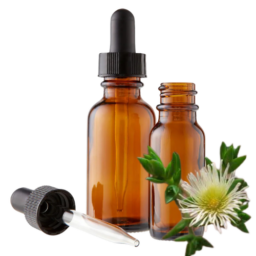
Sceletium tortuosum, also known as kanna or kougoed, is indigenous to South Africa and has a long history of use, particularly among San and Khoikhoi communities.
Traditionally, the plant was prepared in a variety of ways and valued for its effects on mood and wellbeing. Historical accounts also describe its use to help cope with thirst and fatigue.
Centuries later, Sceletium has found itself in an entirely different environment: the modern supplement aisle.
Why Is Sceletium Receiving So Much Attention?
Part of the answer lies in a group of naturally occurring compounds known as mesembrine-type alkaloids.
These compounds have attracted scientific attention because of the way they interact with pathways in the nervous system. Modern research has consequently explored standardised Sceletium extracts in areas including stress, mood and cognitive function.
It is an exciting area of research, although there is still plenty to learn. Sceletium should not be considered a replacement for appropriate treatment for anxiety, depression or other mental health conditions.
What makes its story particularly interesting is just how far it has travelled.
A plant used as part of indigenous South African knowledge long before the modern wellness industry existed is now being researched, standardised and incorporated into contemporary formulations around the world.
Discover Sceletium →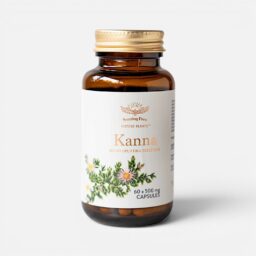


Sutherlandia: The Story Behind “Cancer Bush”
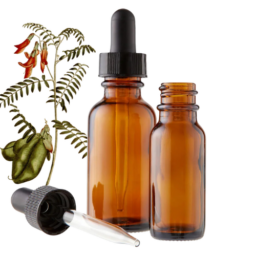
With its distinctive red flowers, Sutherlandia is one of South Africa’s most recognisable indigenous medicinal plants.
You may also see it referred to by its current botanical name, Lessertia frutescens, although Sutherlandia remains the name familiar to many South Africans.
Its traditional uses are remarkably varied. Sutherlandia has historically been used for everything from poor appetite and digestive complaints to colds, stress and general wellbeing. It has also traditionally been valued as a tonic, which is one of the reasons it has maintained such a prominent place in South African herbal medicine.
And then there is the name many people know it by: cancer bush.
Why Is It Called “Cancer Bush”?
The name forms part of Sutherlandia’s long history of traditional medicinal use, which has included its use by some communities in supporting people living with serious illnesses, including cancer.
That traditional use has also sparked considerable scientific interest.
Researchers have investigated Sutherlandia and its naturally occurring compounds for a range of potential biological activities, including anti-inflammatory, antioxidant, immunomodulatory and anticancer properties. Much of this research has taken place in laboratory and preclinical settings, and researchers continue to explore what these findings could mean in people.
While the emerging research is certainly interesting, there is not currently enough clinical evidence to position Sutherlandia as a treatment for cancer or as a replacement for conventional cancer care.
And perhaps its significance does not need to rest on one claim.
Sutherlandia’s long history of traditional use, fascinating phytochemistry and continued scientific interest make it one of South Africa’s most noteworthy medicinal plants. It is also a wonderful example of how traditional knowledge can inspire questions that modern science then begins to investigate.
Discover Sutherlandia →

Artemisia afra: The Familiar Scent of Wildeals
For many South Africans, Artemisia afra needs little introduction.
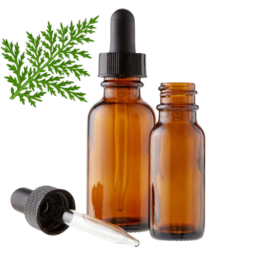
Also known as African wormwood or wildeals, this aromatic indigenous plant has been part of traditional home remedies for generations. Crush its soft, silvery-green leaves between your fingers and you will immediately notice its distinctive scent.
Traditionally, Artemisia afra has been used for a wide variety of everyday complaints, but it is perhaps best known for its association with coughs, colds, fever and respiratory complaints.
Depending on the tradition and intended use, the leaves have been prepared as herbal teas and infusions or used in steam inhalations.
It is another plant that has comfortably made the transition into modern herbal medicine. Today, Artemisia afra can still be found in teas, tinctures and combination herbal preparations.
What Does Modern Research Say?
Unsurprisingly, a plant with such a long history of traditional use has attracted the attention of researchers.
Scientists have explored the phytochemistry of Artemisia afra and investigated a number of its potential biological activities. Research is ongoing, and not every traditional application has been established through modern clinical studies.
There is also an important distinction worth knowing. Artemisia afra is not the same plant as Artemisia annua, the species associated with the well-known antimalarial compound artemisinin.
It is a useful reminder that appreciating traditional medicinal knowledge does not require us to overstate what we currently know. Traditional use can provide an important starting point, while modern research gives us another way to explore the plants and compounds behind it.
Discover Artemisia →


Buchu: A Truly South African Botanical
If there is one herb that feels particularly at home in a South African medicine cupboard, it might just be buchu.
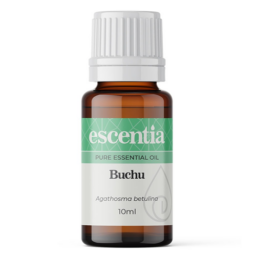
Native to South Africa, buchu generally refers to Agathosma betulina and Agathosma crenulata. Their wonderfully aromatic leaves have a long history of traditional use, particularly in relation to urinary and digestive wellness.
But what makes buchu’s story especially interesting is how far it travelled.
Knowledge of the plant eventually spread beyond indigenous traditional medicine, and by the 19th century buchu had become a recognised herbal remedy well beyond South Africa. Over time, it found its way into commercial herbal preparations internationally.
Buchu Today
Interest in buchu certainly has not disappeared.
Researchers have explored buchu extracts and their naturally occurring compounds for a number of potential properties, including antimicrobial, antioxidant and anti-inflammatory activity. Much of this research remains preliminary, however, and findings in a laboratory do not necessarily translate directly into the same effects in people.
Today, buchu can be found in teas, tinctures, capsules and combination formulas, particularly those formulated around urinary wellness.
There is something rather special about seeing a botanical so closely connected to the Cape continuing to find a place in contemporary herbal medicine around the world.
Discover Buchu →

What Can Traditional Medicine Teach Us Today?
When we talk about traditional medicine, it is easy to fall into one of two camps.
Something has been used for generations, therefore it must work.
Or, if there is not a large modern clinical trial behind it, centuries of traditional knowledge have nothing to teach us.
The reality is far more interesting.
Traditional use gives us a record of how people interacted with medicinal plants over generations. Modern science gives us a different set of tools to investigate those plants, identify their constituents, explore how they interact with the body and test whether particular effects can be demonstrated.
Traditional knowledge and modern research are not the same thing, but they do not need to compete with one another either.
In fact, many plants now being investigated by researchers first attracted scientific attention precisely because of their long histories of traditional use.
It is also worth remembering that how a herb is prepared matters.
A cup of traditionally prepared herbal tea is not necessarily equivalent to a tincture, concentrated extract or modern standardised supplement. Different preparations may provide very different concentrations and combinations of the plant’s naturally occurring compounds.
And natural does not automatically mean suitable for everyone.
Herbal medicines can interact with conventional medications, and certain herbs or extracts may not be appropriate during pregnancy or breastfeeding, or for people with particular health conditions.
Respecting traditional herbal medicine also means using it thoughtfully.
Celebrating a Living Heritage
Heritage is not only about looking back.
Pelargonium, Sceletium, Sutherlandia, Artemisia afra and buchu are still being grown, prepared, studied, formulated and used today.
And they are only five examples from South Africa’s extraordinary botanical landscape.
Their stories remind us that many ingredients we now encounter neatly packaged on a pharmacy shelf have histories stretching back far beyond the modern wellness industry.
Behind them are plants, landscapes, communities and generations of knowledge.
This Heritage Month, we are celebrating that history, while also celebrating the fact that South Africa’s medicinal plant heritage is still very much alive.
From traditional preparations to contemporary herbal formulations, these remarkable indigenous plants continue to connect the knowledge of the past with the possibilities of modern herbal medicine.
Not Sure Which Herbal Medicine Is Right for You?
A long history of traditional use does not necessarily mean that a particular herb is suitable for everyone.
Your health history, medications, other supplements and individual needs should all be considered when choosing herbal medicines.
Our in-store homeopathic doctors can help you navigate the different herbs, extracts and formulations available and provide personalised guidance based on your individual needs.
Visit us in-store or speak to one of our practitioners for personalised guidance.
